


iHerb: Vitamins & Supplements
4.77.14K Reviews
App Specs
- Version
- 12.8.0820
- Updated On
- License
- Free
- Downloads
- 10,000,000+
- Developer
- iHerb
- Categories
- Shopping
- Platform
- Android, iOS
Screenshots


 Analysis by AppCompare
I use iHerb as a shopping app when I want to compare vitamins, supplements, active nutrition products, personal care items, and related wellness goods without jumping between several specialist stores. My usual starting point is simple: I know what I need, but I do not always know which form, strength, size, or brand makes the most sense. The app is useful in that in-between stage because it puts a broad selection in one place and lets me move from a vague shopping goal to a more organized basket.
That convenience is also the main thing to understand before installing it. This is not a medical consultation tool, and it does not replace advice from a doctor or pharmacist. I see it as a wellness shopping app with a large catalog, not as a system that decides what my body needs. Used with that boundary in mind, it can make repeat purchases and product research much easier.
From a vague wellness need to a more considered basket
The app belongs to the Shopping category and is developed by iHerb. It is free to install, carries a Mature 17+ content rating, and has been available since November 22, 2013. Its current version is 12.8.0820, with support beginning at operating system version 9. Those details matter less than the everyday experience, but they show that this is an established shopping service rather than a newly launched experiment.
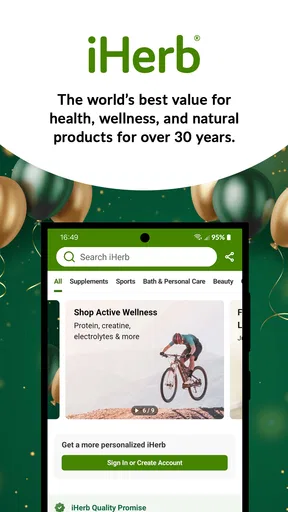
When I open it with a specific goal, the experience feels more manageable. For example, I might be preparing for a month of exercise and looking for protein, electrolyte products, or a basic personal-care item. Instead of searching the entire wellness market, I can begin with a product type and then narrow my attention by brand, format, ingredients, or intended use where those choices are available. I find this more practical than browsing a physical health store aisle, where packaging can make every option look equally urgent.
The first important habit is to separate the need from the marketing language. If I am looking for a magnesium product, I do not treat “sleep,” “calm,” or “recovery” wording as a diagnosis. I check the ingredient name, serving information, form, and package size before thinking about the promise on the front of the label. The app makes comparison convenient, but it cannot make a questionable claim reliable. The best result comes from using the catalog to investigate, not to self-prescribe.
Search is most helpful when I already have a short list of terms. A vague query such as “better health” is likely to create too much choice. A more useful approach is to search for the product category, then refine by format. Capsules, powders, gummies, liquids, bars, and topical products can suit very different routines. Someone who dislikes swallowing pills should decide that early, because an attractive ingredient list is not useful if the product will sit untouched in a cupboard.
I also pay attention to serving size rather than judging value from the container alone. A large bottle may not provide as many usable servings as expected, while a smaller package can be more convenient for testing a product. This is one of the less obvious advantages of shopping digitally: I can compare the label details side by side instead of relying on package height or a quick glance at a shelf.
Worth Reading Before You Choose

Flipboard Shows What News Apps Must Do Beyond the Feed

Switching to Android Auto Means Rethinking Your Driving Routine

Google Calendar Makes a Crowded Week Easier to Manage

Ludo King Makes the Most of the Minutes Between Plans

Baby Panda World Brings Quick Play to Modern Phones, but Its Game Library Feels Busy

ESPN’s Live Game View Makes Following Close Games Easier
How I move through product research
Once I find a promising item, I slow down before adding it to the basket. I read the product title, description, ingredient panel, suggested use, and warnings. I check whether the item is a single ingredient or a blend, because blends can be convenient but make it harder to understand exactly how much of each component I am taking. If I am already using other supplements, this check helps me notice overlapping ingredients before checkout.
Reviews can add useful context, but I treat them as experience reports rather than proof. A person may praise a flavor, texture, package design, or ease of mixing, while another person may be reacting to a completely different diet, routine, or expectation. For powders and chewable products, those practical comments can be valuable. For products connected to a health condition, medication, pregnancy, or allergy, I would give professional advice much more weight than a crowd of enthusiastic comments.
The scale of the service is reflected in its 4.7 average rating from around 736 thousand ratings, and it has passed 10 million installs. I would not use popularity as a substitute for checking a label, but it does make the app feel well established. The large user base also means I am more likely to encounter a range of opinions about taste, packaging, or usability than I would on a small specialist site.
One workflow I find especially useful is creating a short comparison rather than opening dozens of products at random. I look for two or three candidates, then compare their form, serving directions, ingredient complexity, package size, and suitability for my routine. This reduces the common shopping mistake of buying several products that all serve a similar purpose. It also makes the final decision less vulnerable to bright packaging or a long list of secondary ingredients.
For active nutrition, timing and portability become practical concerns. A tub of powder may be economical for regular home use, but single-serve formats or ready-to-use products may fit better in a gym bag. On the other hand, convenience packaging can create more waste and may not suit someone who wants the lowest cost per serving. The app helps me see these options together, but the trade-off remains mine to judge.
The handoffs between discovery, decision, and delivery
The shopping process has several handoffs that are easy to overlook. First, I move from a personal goal to a search phrase. Then I move from search results to a product page, from product information to a basket, and from the basket to the delivery stage. Each handoff can introduce friction. A product that looks right in search may have a different format than expected, while a basket assembled over several visits may contain items I no longer need.
I recommend reviewing the basket as if someone else had prepared it. I check duplicate ingredients, quantities, flavors, formats, and whether every item still matches the original reason for shopping. This is particularly important when buying for more than one person. A product suitable for an adult may not be suitable for a teenager, and a personal-care item may have different practical requirements from a supplement even though both appear in the same broad catalog.
Another useful handoff is between the app and my own household routine. Before ordering a product, I ask where it will be stored, when it will be used, and whether I can realistically follow the directions. A supplement that requires a routine I cannot maintain is not a good purchase, regardless of how appealing the product page looks. I also avoid buying a large quantity of an unfamiliar flavor or format before I know that I will actually use it.
For recurring needs, the app is strongest when I treat it as a planning tool rather than an impulse marketplace. I can make a note of the product name, format, and reason I chose it, then use that information when I shop again. This creates a simple personal record without pretending that every purchase should become a permanent part of my routine. If my diet, medication, exercise pattern, or health advice changes, I reassess instead of automatically repeating the same basket.
The developer’s broad catalog is convenient, but breadth can make decision fatigue worse. I sometimes spend more time comparing minor differences than the purchase deserves. A good rule is to define the decision criteria before browsing: for instance, preferred form, a short ingredient list, a manageable serving routine, and a package size appropriate for a trial. Once a product meets those criteria, I stop searching unless there is a clear reason to continue.
A realistic everyday use case
Imagine I have finished a busy workweek, started exercising again, and want to prepare a simple weekend order. I need a protein product for occasional use, an electrolyte option for longer sessions, and a personal-care item. I begin by searching each category separately instead of typing one broad wellness phrase. For the protein product, I compare flavor and format first. For electrolytes, I inspect the ingredient panel and serving directions. For personal care, I focus on the actual use and skin or hair needs rather than adding products because they appear beside the nutrition items.
After choosing a few candidates, I review the basket for overlap and practicality. If the protein powder comes in a flavor I already know I dislike, I remove it even if its label looks attractive. If the electrolyte product contains ingredients I am already getting elsewhere, I reconsider whether it adds anything useful. I then make sure the personal-care item fits the intended routine and that I have not confused a topical product with an ingestible one while moving quickly through the catalog.
The outcome is not simply a delivered package. The useful outcome is a basket that matches my actual week: products I understand, can store, and am likely to use. That distinction is why I prefer this app to browsing without a plan. It can shorten the path from need to purchase, but only if I supply the judgment that the catalog cannot provide.
This workflow also shows who will appreciate the app most. It suits people who already buy wellness products, want to compare several brands, or prefer ordering from a phone. It is especially handy for repeat shoppers who have learned which forms and flavors fit their routine. Someone managing a carefully defined supplement plan may also appreciate having many categories together, provided they verify each item independently.
I would be more cautious recommending it to someone who wants a professional to choose a treatment, interpret symptoms, or confirm that a supplement is safe with prescription medication. In that situation, a pharmacist, doctor, or specialist service is the better first stop. Likewise, a person who only needs one ordinary household item may find a nearby general retailer faster, especially if immediate pickup matters more than catalog breadth.
Where the flow becomes less comfortable
The biggest weakness is choice overload. A large wellness catalog can make shopping feel productive even when I am only comparing labels endlessly. The app is better for a defined purchase than for wandering through every trend. I also need patience with product claims and promotional presentation. A polished page can explain a product clearly, but it should not turn a supplement into a guaranteed result in my mind.
There is also a trust gap between reading information and knowing whether it applies to me. The app can show ingredients and directions, but it cannot see my medical history, diet, allergies, or other products. This is why I would never use a high rating or a convincing review to settle a safety question. The shopping interface is the handoff point; the responsibility for appropriate use remains outside it.
Another possible friction is that online comparison encourages me to optimize details that may not matter. I can spend too long debating small differences in flavor, packaging, or brand presentation while ignoring the more important question of whether I need the product at all. I get better results when I decide my non-negotiables first and accept that no product page will remove every uncertainty.
The age rating of Mature 17+ is worth noticing for households where younger users share a device. Adults should handle purchases involving supplements and personal-care products, particularly when labels include warnings or when a young person is asking for something based on social-media advice. The app’s shopping convenience should not be confused with suitability for every age group.
Compatibility is another practical checkpoint. The app supports operating system version 9 and later, which covers many devices, but anyone using an older phone should check compatibility before planning a purchase around it. On a supported device, I would still keep the operating system and app updated when possible, especially for a shopping service that handles account and order activity.
How it compares with ordinary alternatives
Compared with a supermarket or pharmacy, iHerb offers a more focused wellness catalog and makes ingredient comparison easier from one screen. A local store wins when I need a product immediately, want to ask a pharmacist a question in person, or prefer to inspect packaging before buying. The app wins when I want more variety or need to repeat a product I already understand.
Compared with a brand’s own shopping app, this service is more useful for comparing multiple brands in one session. A brand-specific store may be the better choice when I am loyal to one manufacturer, want that company’s complete range, or need information that only the manufacturer can provide. The trade-off is that a multi-brand catalog requires more personal filtering and makes it easier to become distracted by alternatives.
Compared with a general online marketplace, the focused categories make it easier to stay within supplements, active nutrition, personal care, and related wellness products. A general marketplace may offer faster delivery or a wider selection of unrelated goods, but I often find its wellness browsing less coherent. Here, the concentration is helpful as long as I remember that a specialized catalog is not the same thing as specialized medical guidance.
Price is another reason people may choose a shopping app, but I do not judge value from the item price alone. I consider package size, servings, format, delivery timing, and whether I will finish the product. A cheaper container that I dislike using is poor value. A slightly more convenient format may be worthwhile for a busy routine, while a larger package is only sensible when I already know the product works for me.
My final view after following the whole journey
After using the app as a complete path from need to basket, I see its strength clearly: it reduces the effort involved in researching and reordering wellness products. The catalog is broad, the shopping focus is clear, and the service has enough history and user adoption to feel established. I particularly like it when I have a defined shopping list and want to compare forms, labels, and practical fit before committing.
Its limitations are equally clear. More choice does not automatically mean better decisions, and product reviews cannot replace professional advice. The app can help me find and organize options, but it cannot decide whether a supplement belongs in my routine. I also need to watch for duplicate ingredients, unrealistic claims, unsuitable formats, and purchases driven by curiosity rather than a real need.
My recommendation is therefore conditional but positive. If you regularly shop for vitamins, supplements, sports nutrition, or personal-care products and are willing to read labels carefully, this free shopping app is a convenient place to compare and manage those purchases. If you need immediate local pickup, personal medical guidance, or only a single basic item, another route may serve you better.
In my experience, the smartest way to use it is to arrive with a question, narrow the search, compare a small number of candidates, check the basket for overlap, and then review the choice against your real routine. That approach turns a crowded wellness catalog into something genuinely useful. The app does not make the decision for me, but it gives me a practical workspace for making a more informed one.
Pros
- Wide selection of vitamins
- supplements
- beauty
- and wellness products.
- Detailed ingredient lists and product information support informed shopping.
- Frequent discounts
- promotions
- and loyalty rewards can reduce costs.
- User reviews and ratings help compare products before purchasing.
- International delivery options make many brands accessible worldwide.
Cons
- Product availability and shipping times vary significantly by country.
- Some items may have short expiration dates when delivered.
- Import duties or local taxes may apply to international orders.
- The large catalog can make finding suitable products feel overwhelming.
- Health claims and reviews should not replace advice from a qualified professional.
FAQs for iHerb: Vitamins & Supplements
What is iHerb: Vitamins & Supplements, and what can I buy through the app?
iHerb is a shopping app focused on vitamins, dietary supplements, sports nutrition, beauty products, personal care items, natural foods, and selected household products. After installing it, users can browse categories, search by brand or ingredient, read product descriptions and customer reviews, compare prices, save items, and place orders for delivery. Product availability, shipping options, and the catalog may vary depending on your country or region.
Is iHerb safe to use for ordering vitamins and supplements?
The app provides access to product information, ingredient lists, usage directions, customer reviews, and seller or brand details, which can make shopping more convenient. However, an app cannot guarantee that every supplement is suitable for every person. Before ordering, check the label, expiration information, allergies, dosage instructions, and local regulations. Consult a doctor or qualified healthcare professional before using supplements, especially if you are pregnant, taking medication, or managing a medical condition.
Does the iHerb app offer discounts, rewards, or special promotions?
iHerb commonly features promotions such as sale prices, first-order offers, brand discounts, coupon codes, and rewards or referral benefits, although the exact terms can change frequently. In the app, discounts may be shown on product pages, banners, or during checkout. It is important to review eligibility requirements, expiration dates, minimum purchase amounts, and whether promotions can be combined. The final price should always be confirmed before completing payment.
How does shipping and order tracking work in the iHerb app?
Shipping methods, delivery estimates, costs, taxes, and available carriers depend on the destination, order value, product type, and local import rules. During checkout, the app normally displays the available delivery options and an estimated arrival period. After an order is dispatched, tracking information may be available from the order section. Delays can still occur because of customs, weather, carrier issues, or regional restrictions, so estimates should not be treated as guaranteed delivery dates.
Can I return products or request a refund through iHerb?
Return and refund eligibility depends on the product, order status, destination, and the reason for the request. If an item arrives damaged, incorrect, missing, expired, or otherwise unsuitable, open the order in the app and follow the available customer-support or return instructions as soon as possible. Keep the packaging and order details until the issue is resolved. Some consumable products may have special restrictions, and refund methods or processing times can vary.


